



updated 2014-10-19
Many great inventions have been suppressed in the past
Today there are great(!) inventions begging to be developed, free from the powerful, corporations of today, whose power and wealth will be wiped out if the status quo is altered – not in their favor. But, “no problem”, those corporations are still preserving their positions. Buying politicians, swaying the public so easily, giving them more than enough to defeat those who who won’t be bought, who want “a change”.
May 13th 2010 – Update: Suppression still going on!!
See Energy saving work being sabotaged!
Magnets exert tremendous forces over short distances for long periods of time. Energy is consumed to align the magnets, and, once aligned, they exert tremendous force.
A motor run solely by magnets was originally suggested by Nikola Tesla in 1905.
Today: “Engineers of Hitachi Magnetics Corp. of California have stated that a motor run solely by magnets is feasible and logical but the politics of the matter make it impossible for them to pursue developing a magnet motor or any device that would compete with the energy cartels.”
see our page “A Few Magnet Motors”.
| if you have an article like these, let us know and we will post it! | |
| April 1922 | Scientific American, page 262 Steam car that is different |
| January 1928 | Scientific American, pages 44-46 Will the stream automobile return? |
| October 5, 1929 | Literary Digest, page 23 Gas-electric auto gearless automobile. |
| January 1930 | Scientific American . page 65 Gas-electric auto. |
| June 3, 1939 | Business Week, pages 44-45 Multi-fuel engine. |
| Dec. 13, 1943 | Newsweek, page 69 Ford’s ideal motor; opposed piston engine. |
| March 1946 | Popular Science, page 78; 59 lb. motor propels Crosely. |
| July 1946 | Popular Science, page 130 – 131; Sam Baylin of Montreal, Canada invented a ‘rotating piston engine’ with only three moving parts. |
| October 1948 | Popular Science, page 169 Steam conversion powered stock car. |
| July 1949 | Popular Science, page 216 Turbine drives small steam car. |
| November 1950 | Science Digest, pages 29 – 34 Revolution of the free-piston engine. |
| November 1951 | Popular Science, page 193 General Motors has built an engine that uses both gasoline and alcohol ! |
| April 25, 1953 | Business Week , page 101-107 Generating more power from less fuel — free piston engine — production. |
| September 1955 | Mechanix Illustrated, page 90-92,204-205, Inventor’s Miracle Car May Revolutionize Auto Industry |
| April 23, 1956 | Time. page 102 New Engine – free piston. |
| June 1956 | Scientific American, page 66 Free piston engine. |
| July 1956 | Popular Science, page 101 Free piston engine tried in a car! |
| July 1957 | Science Digest, page 93 Free piston jet engine will power cars and plants. |
| January 1961 | Science Digest Challenge to the gas engine. |
| May 1962 | Reader’s Digest, pages 109 – 112 Auto engine burns almost anything! |
| Sept. 1968 | Mechanix Illustrated, with photos, Ford steam engine. |
| April 1969 | Popular Science Amazing Pontiac mini car! (hybrid concept) |
| May 1969 | Popular Science “French Piston Engine has no Crankshaft” page 69 |
| June 1969 | Popular Science “Modern STEAM CARS are Really on the Way” pg. 45 |
| June 1974 | Popular Science Pollution-free engine saves fuel. |
| May 1976 | Mechanix Illustrated, Steam engine for your car. |
| January 1977 | Mechanix Illustrated, pages 50-51 Multi-fuel Bricklin engine. |
Conservation of Energy
Free Energy
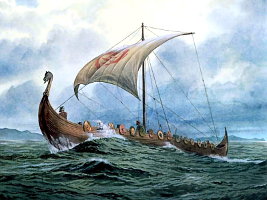
The Law of Conservation of Energy is generally thought to be correct when it states that more energy cannot be taken out of any system than is in that system. However, that does not mean that we cannot get more energy out of a system than we put into it. An age-old example is sailing ships that have freely traveled the rivers and oceans for centuries without any visible energy coming from within the sails – the wind, when it comes, is external to the ship and its sails – and we did not provide the wind.
A modern example is a solar panel in sunlight. We get electrical power out of the panel but we do not put the sunlight into the panel.
There are inventors mentioned here who have tapped into sources of energy we may have seen but do not yet understand. (Nikola Tesla is the most phenomenal of all.)
We use energy in the form of radio, radar, sonar, miicrowaves and etc. – none of which are visible. But there is no point in saying that a TV set cannot possibly work because we cannot see the pictures traveling through the air to the antenna.
The Conservation of Energy is just one of many physical laws which have been abused to deny any reality which would upset the status quo.
Incidents of Suppression
In 1982; in Denver, Col.; I designed and built an ugly but functional vapor carb. for my 1967 Dodge Coronet. It used exhaust heat to assist in the vaporizing of the gasoline- which was sprayed into the heat exchanger at the bottom of the device- and the vapor rose through a maze of approx. 25 feet folded back and forth on itself at which it exited into a 2 1/2″ ID hose (radiator hose) which I ran to an adapter on top of my existing carb which I used to start the 318 cubic inch engine. I achieved 87 miles per gallon. The machine shop that I had help me make the contraption told me that they had helped an earlier inventor with a very NICE carb. to adapt it to his auto – with approximately similar results. (Mine only ran me about $500 total w/ all the junk you have to assemble to get it to work.) They warned me not to make it too public, because the other inventor got the notice of some oil people from Texas who came up and gave him an offer to assume his invention. He refused. His home and workshop burned down 2 days later! He moved to parts unknown.
I just thought you might find it interesting to hear from someone who has done this before. My point in the whole thing was; “If I could achieve 80+ mpg with a total of $500 invested- on a ’67 Dodge Coronet 318 V8; what could Chrysler do with the millions they have to invest?”
“In 1933 Charles Nelson Pogue made headlines when he drove a 1932 Ford V8, 200 miles on a gallon of gas during a demonstration conducted by The Ford Motor Company in Winnipeg, Manitoba using his super-carb system.” The Pogue Carb went into production and was sold openly. [317 were sold?] In the opening months of 1936, stock exchange offices and brokers were swamped with orders to dump all oil stock immediately. His invention caused such shock waves through the stock market, that the US and Canadian governments both stepped in and [successfully] applied pressure to stifle him.
“he saw Mr. Pogue in the midst of a bunch of oil company big wigs. He named the wigs, but I forget the names. They were heads of Texaco, Shell, Esso, etc. Some of them had red faces, and Mr. Pogue looked like a trapped rabbit.”
Pogue went overnight from impoverished inventor to the manager of a successful factory making oil filters for the motor industry.
[ see photo of Don Garlits with Pogue carb. on “Super Carburetors Hist.” page ]
see Charles Pogue Carb.
Ron Brandt is the inventor of the perm-mag motor.
When he was a young man, he invented a 90-mpg carburetor. He was paid a visit by a man from Standard Oil, another man, and two men wearing US Marshal uniforms. They told him that if he ever made another carburetor, they would kill him, his wife, and two young children. He was quickly persuaded that his life wasn’t worth a “damn” carburetor. He happened to think to memorize the badge numbers of the two US Marshals and so had an attorney in Washington, DC check with the US Marshal’s office. They had no record of the two badge numbers.
Tom Ogle, a 24 year old mechanic drove 200 miles in a 1970 351 ci. Ford on 2 gallons of gas. Other mechanics and engineers checked for hidden tanks, none were found. Reporters and a camera crew went with him 100 miles out and back; 200 miles 2 gallons. He claimed from the beginning that he did not know exactly how the system worked, just that it did and he proved it time and again. He had hoped other engineers would help to explain what he was doing. I have seen three different news articles on him and reprinted here for your understanding. One states he turned down $ 25 million from backers that would keep it off the market. He had a hard time getting backers that had integrity. Everybody wanted controlling interest and he knew it was going on the back shelf. Tom resisted and tried to get it on the market. Later he was shot and survived, only four months later he did die of an overdose of darvon and alcohol with no suicide note. Nobody explained what became of his idea. A patent was issued Dec. 11, 1979 # 4,177,779. Four months after his death.
see Tom Ogle Carb.
Another person’s notes on a few
More than 50 years ago – George Arlington Moore was issued more patents on fuel efficiency systems than any man in history to date…
The late 50’s and early 60’s – The Kendig and Fish variable venturi carburetors have some very interesting mileage figures… The Fish even gets into production on a very small scale – but, both of these carburetors fade away over the next few years…
1968 – Ford Motor Company begins experiments with an engine that has a different kind of combustion chamber… A fuel injected version of 430 cid is tested and runs very well on an Air/Fuel mixture of 26:1 – Ford experimented with this engine for possible production by 1985 – Obviously it was never put into production…
1973 – The annual Shell Oil Company employees contest turns out a world record for high mileage at Wood River, Illinois… A highly modified Opel of 1959 vintage sets the record with 376.59 miles per gallon – World record mileage is now well over 2,000 miles per gallon from very specialized vehicles designed to do one thing – get the most mileage possible…
1974 – An article from “Mechanix Illustrated”, about Humidifier Type Fuel Systems, tells of a man by the name of LaPan – who claims to get from “60 to 100 miles per gallon” with his system…1976 – A modified Ford Pinto equipped with a turbocharged Nissan diesel engine is tested and gets up to 80 miles per gallon…
1977 – Tom Ogle, of El Paso, Texas, claims to get 100 miles per gallon on his 1970 Ford Galaxie with V-8 engine, weighing 4600 lb… Running one round trip test from El Paso, Texas to Demming, New Mexico and back used only two gallons of gas… His Vapor Fuel System eliminates the standard carburetor, only has a three gallon tank, and emits no carbon dioxide or unburned hydrocarbons…
1977 – A standard VW Rabbit diesel with turbocharger, is independently tested and gets up to 55 miles per gallon…
1979 – Ralph Moody Jr., of Oak Hill, Florida, gets 84 miles per gallon from his modified Ford Capri, which has been equipped with a turbocharged 4-cyl Perkins diesel engine…
Many thousands of backyard inventors have come up with systems that get a much better efficiency from gasoline than does the modern carburetor or fuel injection, and a few have built systems that get a drastic increase…
A letter from Mr. Gail Dye of Benton, IL – claims that he has been offered a $100,000 a year job to quit playing around with these things… We haven’t heard from him since – Maybe he took the job…?
A man in Richardson, TX was selling plans to a carburetor modeled after the Pogue but used in conjunction with the standard carburetor for starting and cold running… An automatic thermostat switches over to the Pogue type carburetor when temperature is hot enough to vaporize the fuel… Upper chamber is 5 inches high and 7 inches diameter, lower chamber is 2 inches deep and 4 inches diameter… He claims to have installed the device on a Lincoln and has obtained up to 100 miles per gallon… He was doing business as: FUELMIZER – Box 6025 – Richardson, TX 75080 – Recent inquiries go unanswered…
John Wesling – Preston, MN worked on his idea to use both heat and vacuum, with a device made up of modified carburetor parts and a heat exchanger to double his mileage in 1981…
Joe Lasante – Bossano, Alberta, Canada was working on a system he said works quite well and is simple to make… He says he can get at least 30 MPG on his 1978 Dodge pickup with a 360 cid V-8 engine… The engine runs Very smooth and it has more power than it did without the modification…
Ken MacNeill, Box 9478, Winter Haven, FL says he can effectively double the mileage of Most Any Car…
Richard Goranflo, 109 Longleaf Lane, Altamont Springs, FL once gave seminars on the subject of high mileage – And claims to get from 45 MPG to 65 MPG on his 1976 Cadillac with 425 cid V-8 engine…
Bernard Wherry, Box 148, St Marys, WV – worked on his high mileage carburetor design for many years… He eventually ended up with three prototypes… With one giving him 60 MPG on a Chrysler with V-8 engine… He wanted to market the carburetors, but without the necessary financing he was unable to do so… He had turned over the designs to a firm who claimed they would market one of the three designs, but to date the Wherry carburetors are not on the market…
Ray Covey of El Paso, TX – worked on a high mileage carburetor modeled after a Sgrignoli design for over a year, and ended up getting 65 MPG on his Chrysler V-8… With an occasional 100 MPG… After applying for a patent, Covey began marketing plans to his device and installed several units for a few of his customers… Covey built another design similar to a Ford Motor Company patent and started marketing plans to the new design too… Covey seems to be able to take ideas from others and make them work very well – To our knowledge, he has no original ideas of his own in the field of high mileage carburetion, but he seems to does do very well with the ideas of others…
Richard Paul, Janesville, WI – Averages 80 MPG on his Oldsmobile Toronado, and says he has achieved as high as 149 MPG on more than one occasion… He says he expects to top 180 MPG with the newest design he is working on…
Herb Hansen – Elgin, IL – Built a vaporizing carburetion system for use with alcohol Fuel… Using 140 proof alcohol in a Ford Pinto he says he gets 70 to 75 MPG and the engine produces more power than it does on gasoline with a standard carburetor…
Fred Holste of Jarrettsville, MD – Claims to have topped 45 MPG with his design for a vapor carburetor… He says he will deny having done so if we print his name though…
more on Energy Suppression …
Inventions, page 2
Today
For detailed instructions on how to get 200-to-400 mpg fuel efficiency (run your car on fumes) see our page
Run your car on vapors-fumes

the T fitting: 1 or 1.5 inch diam. about $3
1 or 1.5 inch diam. vinyl tubing: about $3/ft
from your hardware store

I remember that one of the magazines (Pop Science; Pop Mechanics; Mechanix Illusutrated) in 1973 or 1974 did a test putting an off the shelf Detroit Diesel in a new Ford Maverick and driving it to Florida & back from Maine. Does anyone else remember this?
what about gravity motors ? Orffirio did one. Or didn’t he ?
I have one coming too. and two other potential mechanisms under
tests and development.
Do you sell your patents?
I am looking for an article that was supposedly printed in Readers Digest in the 30’s or 40’s that was written by a person claiming to have invented a method for creating fuel from H20. I have not been able to find ANYTHING concerning this. Is anyone there familiar with this? Supposedly, the inventor just “happened to disappear” shortly after this article was printed. Any help would be greatly appreciated .
see our page “history of hydrogen powered cars”
im writing a paper on alt. fuel systems and the oil industries effect on those alt. fuel systems. where are you getting your facts from I wanna make shure that I have all my information correct when I write my paper.
google search for the original sources.
. . . used magnets and heat. Diesel units used magnets, heat and 7 unspecified metals to crack the carbon chains. . . . over gap the spark plugs 20%, . . . Change out the injectors (less flow)(ebay) and then see what she does. . . . Change out the cat with an eastern catalytic 79918 high flow cat and flow through exhaust. . . . South facing n52 (oposing each other) magnets on the fuel lines ahead of the injectors and preheat the fuel with a coolant heat exchanger like the tgcc. Magnets have to be south facing and very close to the injectors to maximize effect.
a lot of work for minor improvements. Save yourself a lot of trouble, “Run your car on vapors” (or water) and get tremendous improvements(!), or go electric. Good luck.
I do have 2004 cavalier that do to new designed engine valves gets 44 m/g.it also gained about 50 HP. Let me know if you need more information. george mcginnis
It is good that you are aware that improvements can and need to be made. When you start getting 400+ mpg tell us about it. see our page “Run Your Car On Vapors”
I recently used two 1 HP brushless motors and 8 high output alternators spliced the DC input in the 1 HP set up a small drive pully 1″ and 3″ pulleys on the 8 alternators that I played with so they spun more freely and plugged in the motor once it was all running. two of the alternators were hitting a capacitor which was switched to the motor and the rest to a table saw chop saw bench grinder a a might welder I killed the wall power hit the switch at nearly the same time time and now have constant power until I kill the feed I’m still in the design phases is its noisy and I haven’t come up with how I want to store the unused energy but it works well and will not ever be allowed to be produce so have fun be safe electricity bites and enjoy your free power.
Great! Sounds powerful. Can you tell us more of how to try it and experiment with it also?
See our page “Run Your Car On Vapors” and “A Hydrogen Generator You Can Build” for other ideas.
i want to know about magnetic motor without ac or dc power. – amarjeet sinbgh brar
for starters, you might read the Tesla Radiant Energy pages and the “a few magnet motors” page
1998 Mercury Sable needs better gas miles. Any ans.
John Winters
Looking to the future, the best answer may be to find an electric car conversion kit (or co. to do it for you). Google search “gas to electric car conversion companies”. We found a list of co’s in 18 different states in Jan 2014.
I am interested in a 100 mpg engine, e-mail me
Questions you might have need to be asked here so that everyone can benefit
I have a 100+MPG engine and nobody cares. Very frustrating.
Mike Felburg
Ideas and drawings, are not enough unfortunately. (in fact, there is a 100+ mpg motor already in development with 2 billionaire investors. see ecomotors)
Sign a confidentiality, non-disclosure agreement and I’ll be happy to fill you in.
Unfortunately, you are a little late – see ecomotors.
So, if we as the masses of people find this technology to be made, whether easy, or difficult, we should be able to create a social system where, for the benefit of better technology for mankind, we should pull people with resources to make these types of technologies together to create a system of separate assembly given there be a one size exact diagram of the technologies. People who are enthusiasts would well support such technologies as it has more potential with power output vs. a combination of fuel/weight/application/and upgrading. These are things society can come together to make together, independantly. That way, there is no wait for a company to make it. It would be built by the people, for the people. …
Sorry, but “create a social system” ?; “society can come together” ?; “built by the people” ?; “one size exact diagram” ? What?
July 1957 Science Digest, page 93 Free piston engine will power cars and plants.
could you publish that article? Please and Thank you.
Why that one? How about one of the others?
None-the-less, it turns out that it is a Free piston jet engine and it was reprinted from Popular Mechanics: Free piston jet engine
nothing surprises me about big oil or big drug companies. Both as crooked as companies can get.
why are these inventions not incorperated in todays auto industry? their has to be a way to improve fuel mileage by either heating fuel to make it a vapor that will burn cleaner and faster and useing much less of it. Also try incorperating some of the old warner anti drag standard transmissions AMC used in the 60’s that would inprove MPG’S overall.